Find the perfect antique rug for your home at our showroom or through our bespoke 'at-home' viewing service.
0
11992
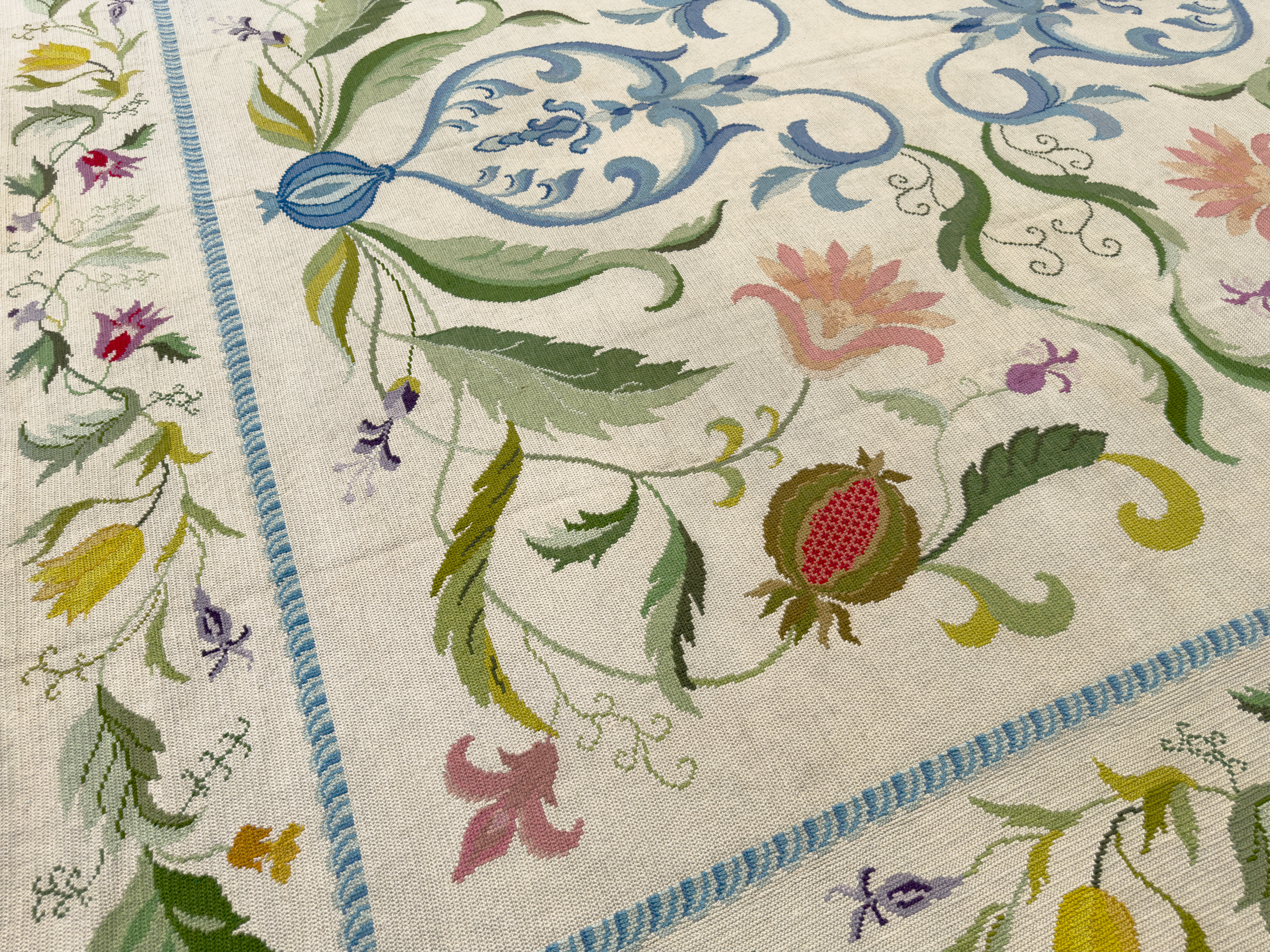
Rare Portuguese Needlepoint
Circa 1940
13’5” x 13’5” 410 × 410 cm
£42,000
Description
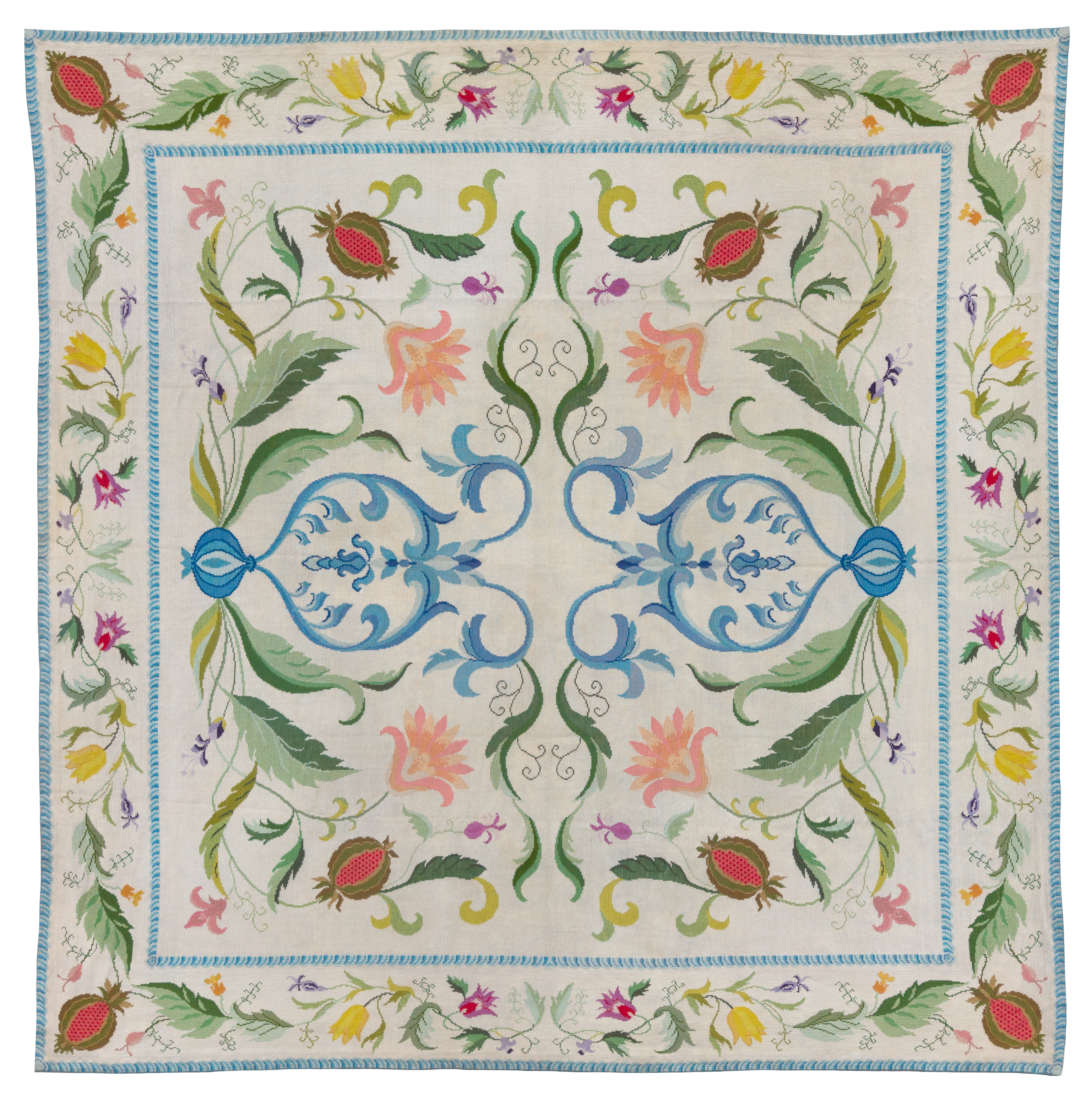
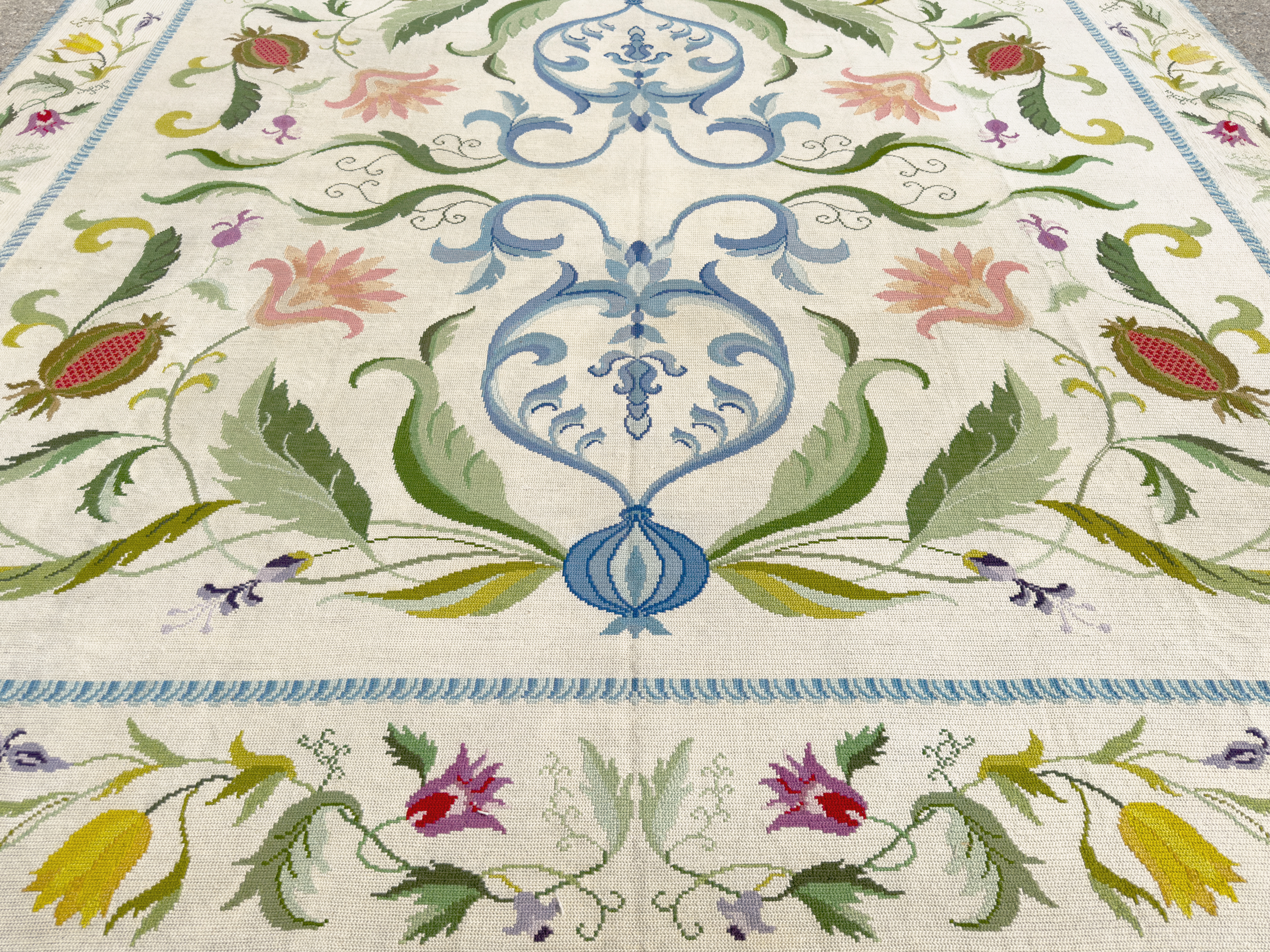
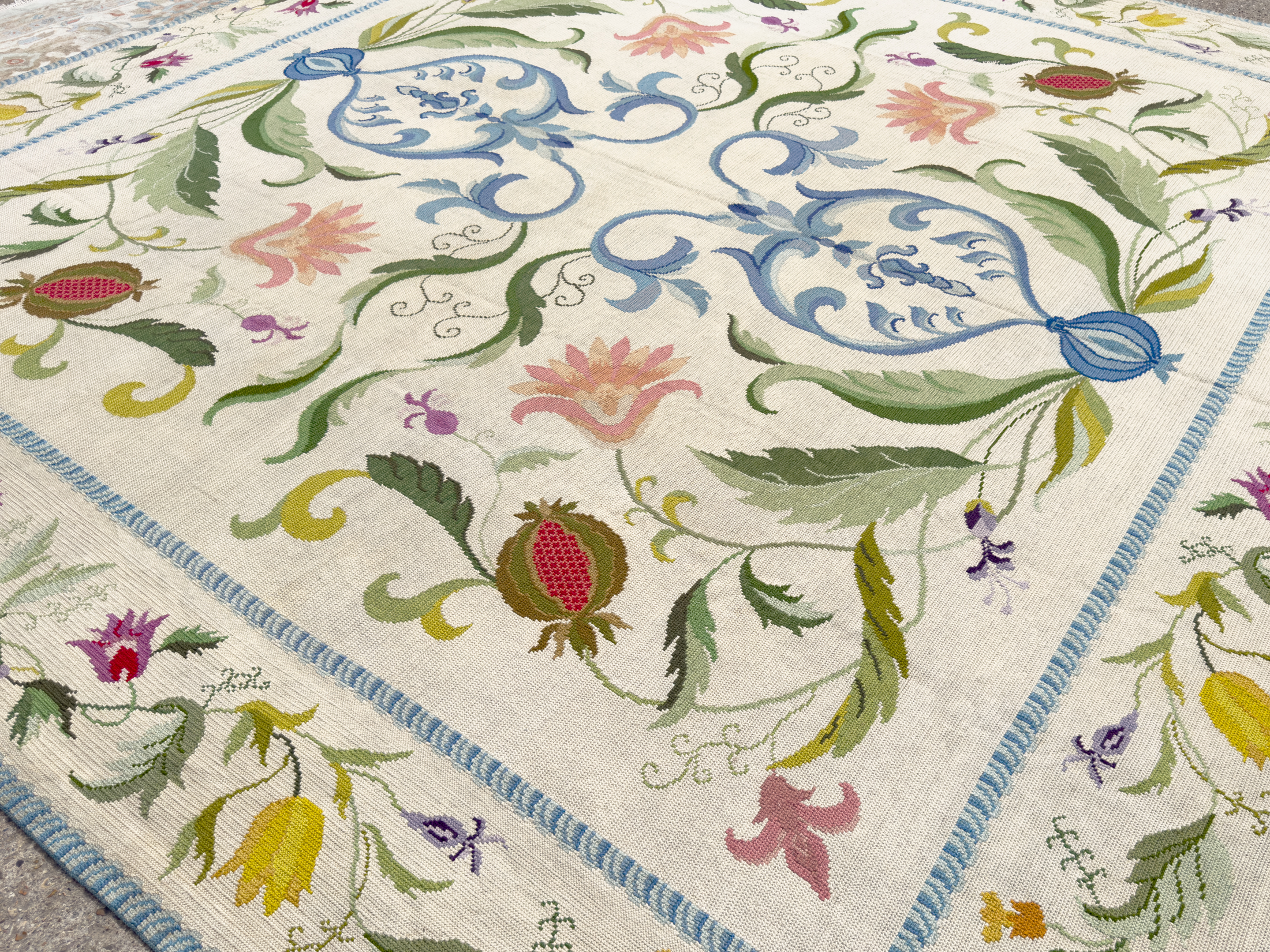
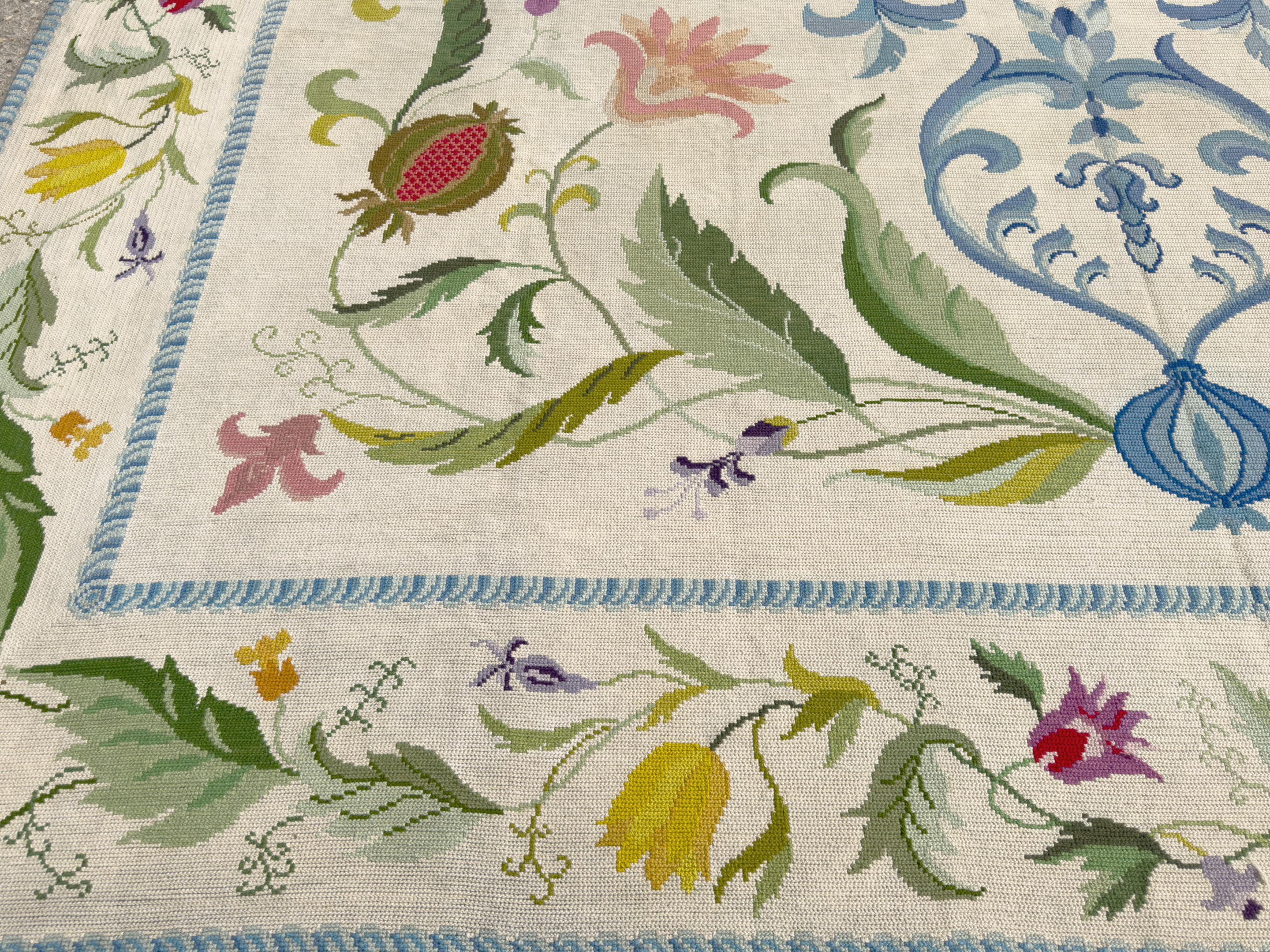
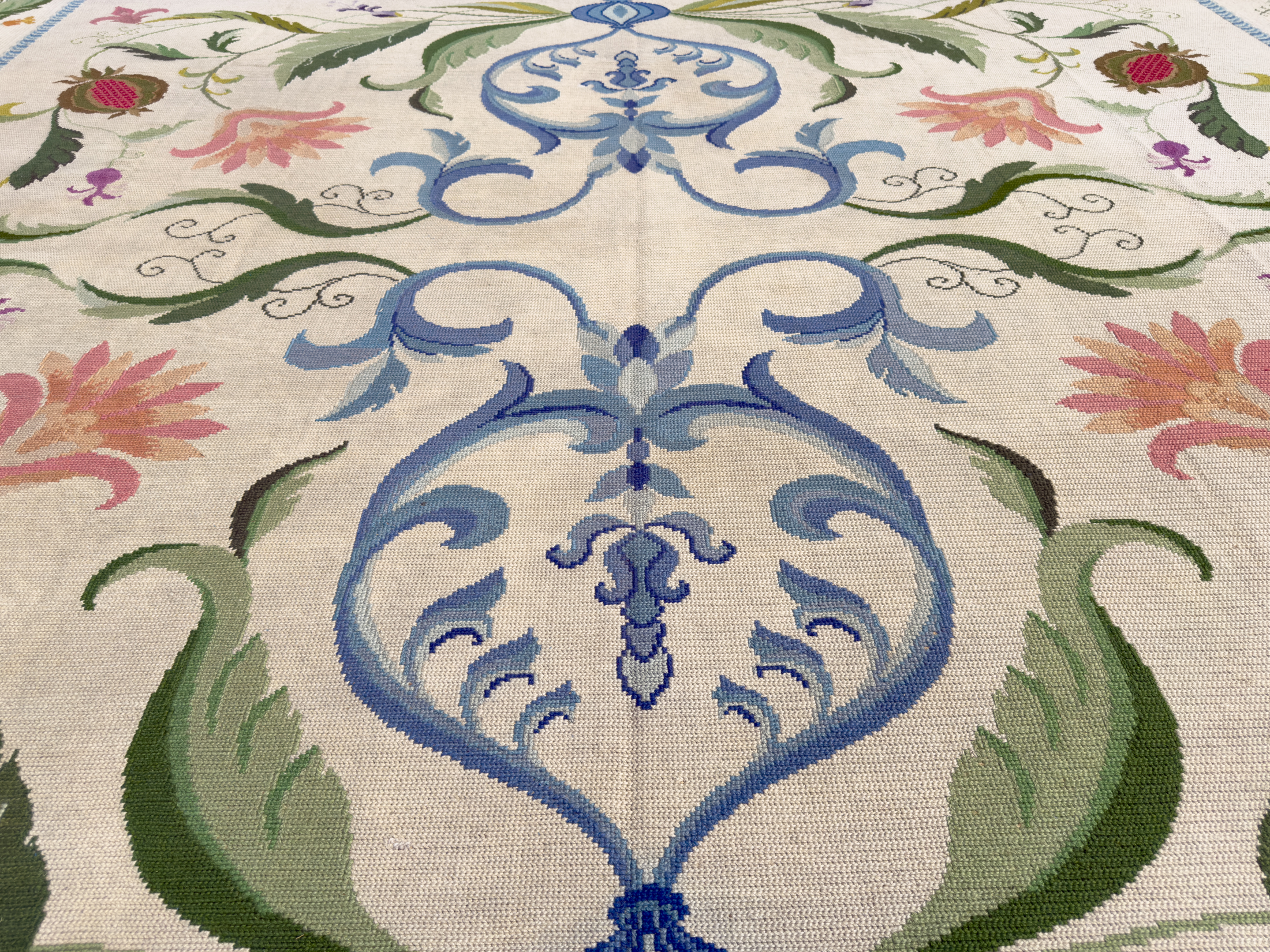
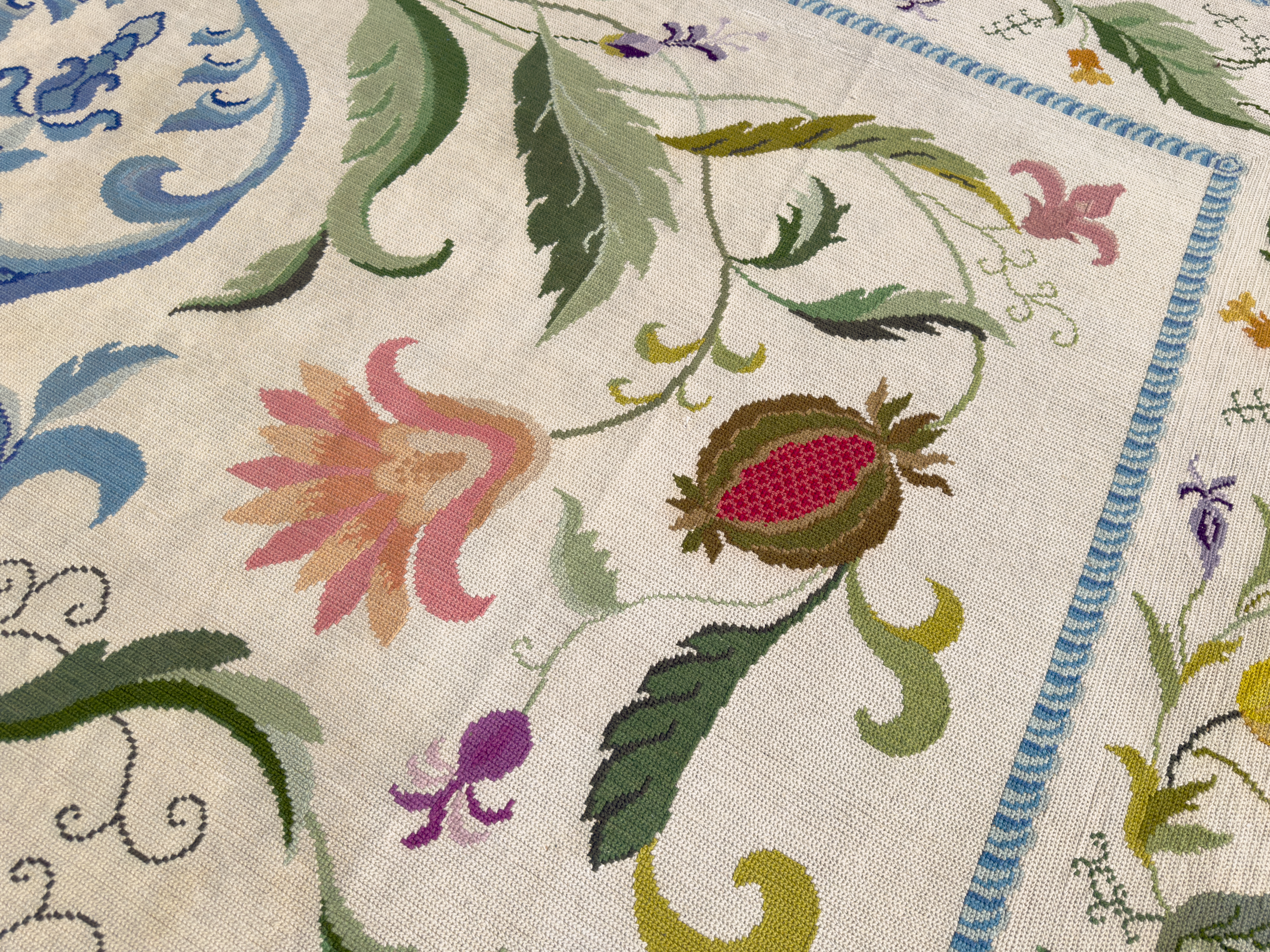
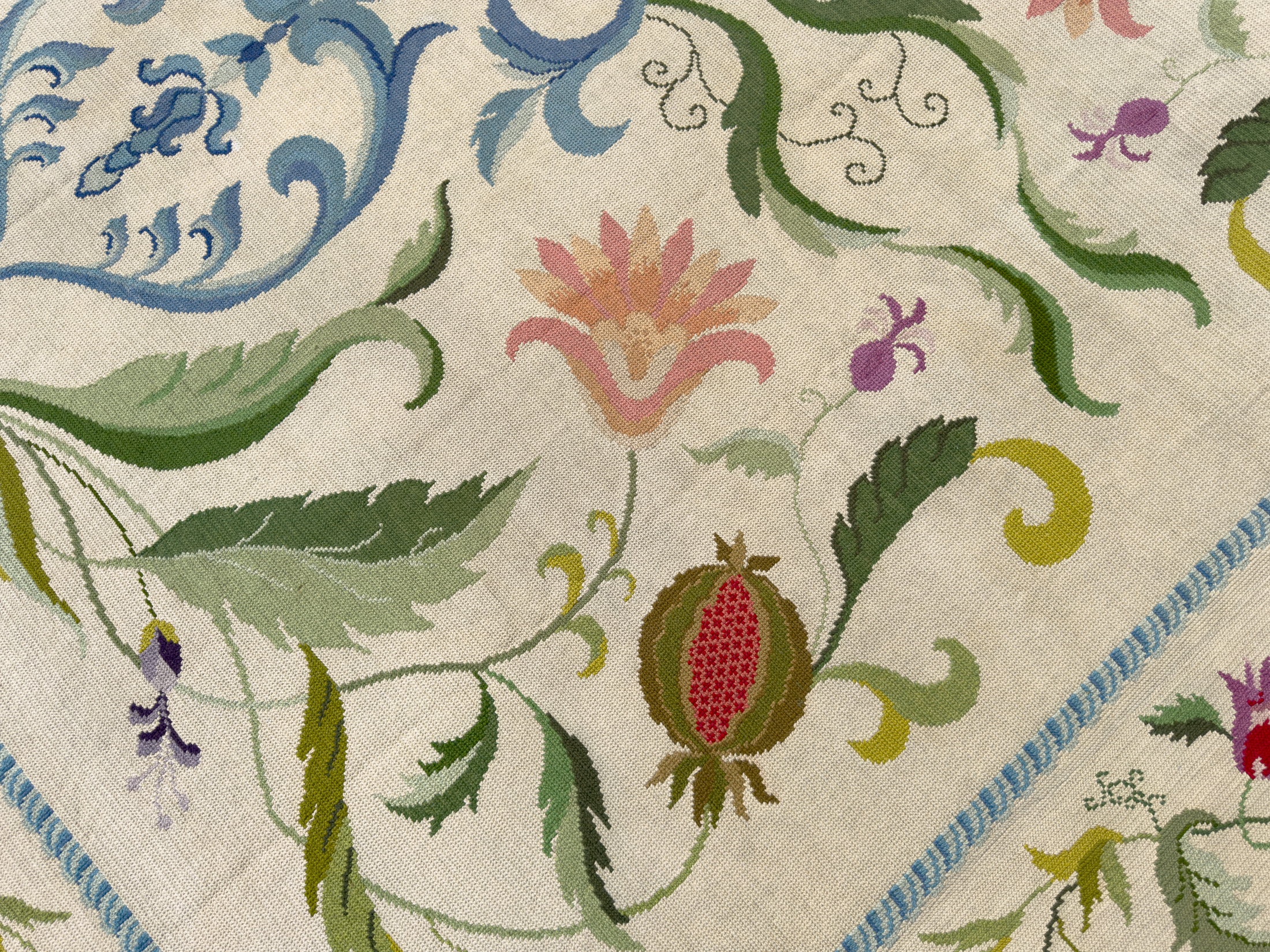
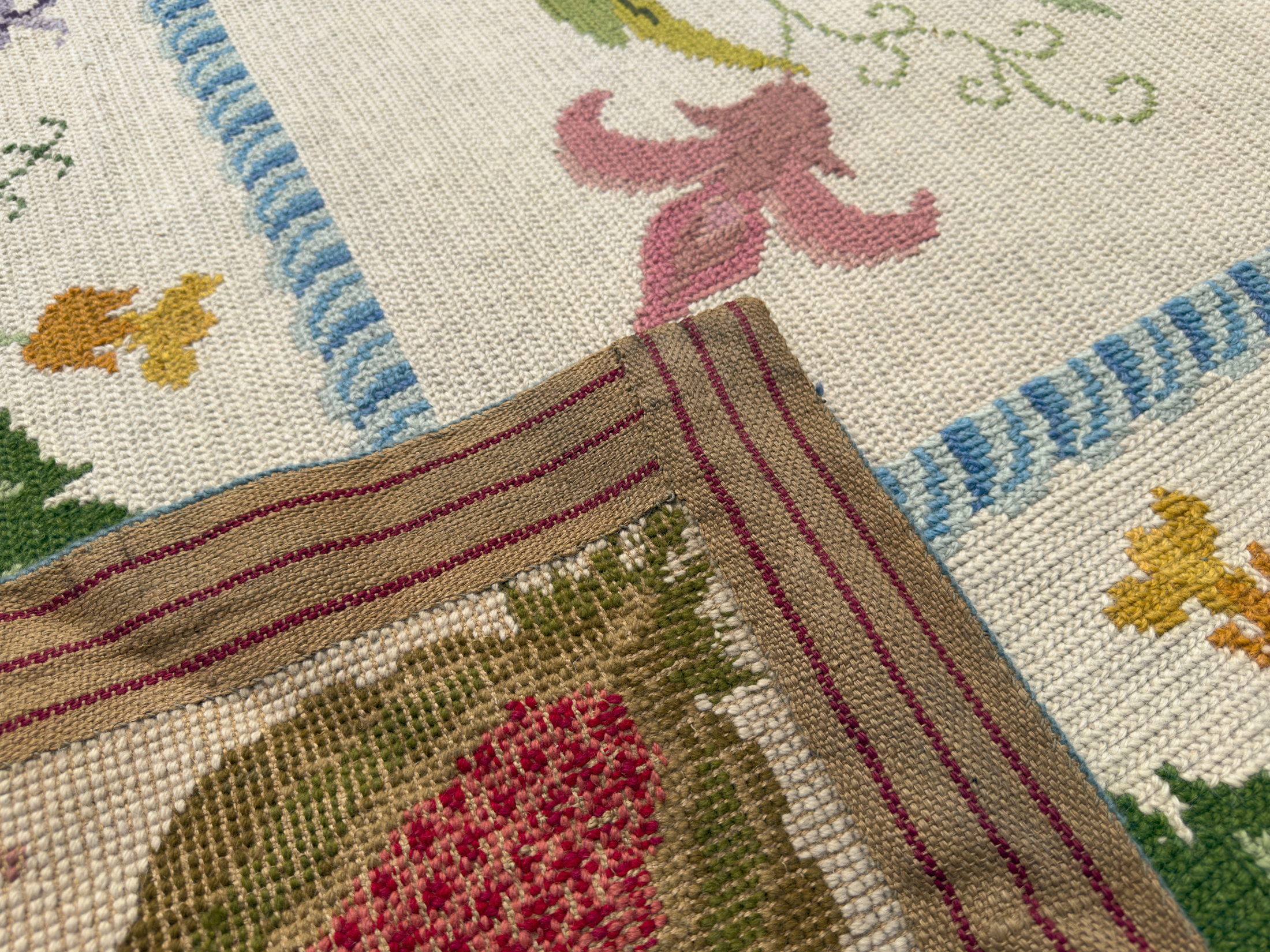
A remarkable rare Portuguese Needlepoint, circa 1930-1940 woven in the village of Arraiolos, Southern-Portugal. A light off white to sandy tone background canvas is a wonderful base colour to work with the exquisite soft pinks, muted reds, and wonderful varying greens with pale blue dyes, the wool used to create this flowing elegant floral design is soft and muted. A rare early example in fabulous condition, from a private collection.
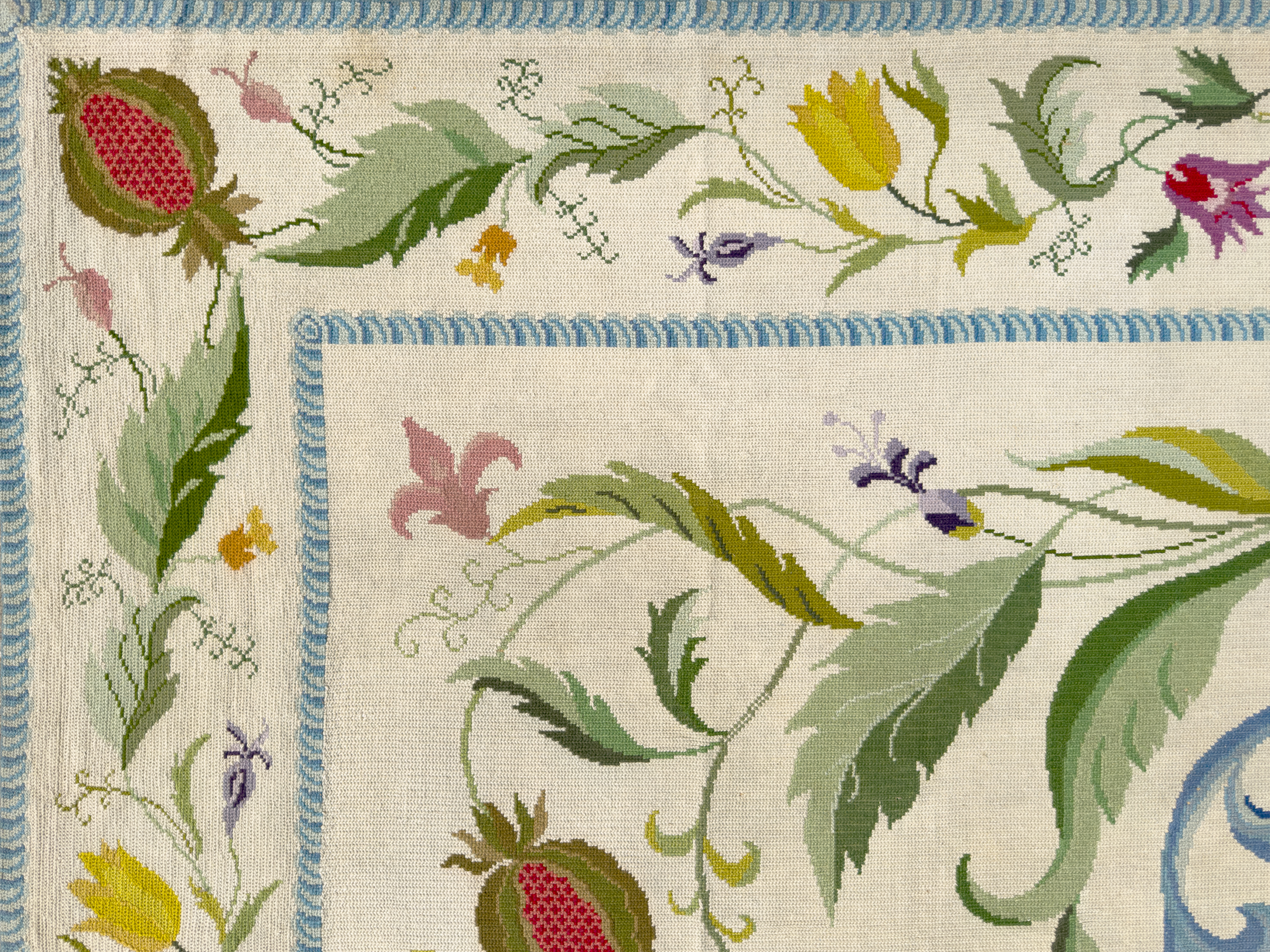
The flowing large scale leaf and floral design with pomegrante’s is similar to designs seen in Pontremoli carpets woven in England from the early 20th century. We have seen a similar design wool carpet in the French chateau of Valentino Garavani, the famous fashion designer, who sadly passed away in early 2026. Please view all the additional images of this exceptional needlepoint to see the detailed work up close.
Arraiolos is where these Portuguese needlework carpets are from a town in the province of Alto Alentejo in southern Portugal. The weave on this needlepoint is Arraiolos long-armed cross-stitch along with hand dyed wool using natural dyes. The Portuguese are also known for weaving specific types of Portuguese rugs that are called Alpujarras Rugs.
Request a home visit to view this rare Portuguese needlepoint in situ soon. Organise a showroom visit if preferable, we are open Monday to Saturday by appointment.
Reserve this needlepoint for your project via our website, we are happy to offer this service.
These Portuguese needlepoints are renowned for their embroidered work in wool on jute or linen. Portugal doesn’t have an extensive history in producing hand-woven carpets although Moorish carpet weavers worked in Portugal until the early 15th century until they were expelled. These floor coverings from Portugal are unique and feature pile in loops, made primarily in Spain from the fifteenth to the nineteenth century in the Alpujarras district, which is located south of Granada.
Once Queen Isabella expelled the Jews in 1492, they headed to Arraiolos, the women brought their expertise and knowledge of weaving needlepoints with them. They started weaving needlepoint carpets to make a living and the women used to weave them in the village on the porch steps in the glorious sunshine! Many of the designs reflect tile work throughout Spain and Portuguese architecture. They are still woven in Portugal today, and you can see women weaving in groups producing beautiful carpets.
Related Carpets
We have found more carpets like "Rare Portuguese Needlepoint"
SELECT SQL_CALC_FOUND_ROWS  wp_posts.ID
					 FROM wp_posts  INNER JOIN wp_postmeta ON ( wp_posts.ID = wp_postmeta.post_id )
					 WHERE 1=1  AND wp_posts.ID NOT IN (38708) AND (
  (
				SELECT COUNT(1)
				FROM wp_term_relationships
				WHERE term_taxonomy_id IN (25,40)
				AND object_id = wp_posts.ID
			) = 2
) AND (
  ( wp_postmeta.meta_key = '_stock_status' AND wp_postmeta.meta_value = 'instock' )
) AND wp_posts.post_type = 'product' AND ((wp_posts.post_status = 'publish')) AND ((wp_posts.post_title LIKE '%Rare Portuguese%') OR (wp_posts.post_title LIKE '%Portuguese Needlepoint%'))
					 GROUP BY wp_posts.ID
					 ORDER BY ((wp_posts.post_title LIKE '%Rare Portuguese%') + (wp_posts.post_title LIKE '%Portuguese Needlepoint%')) DESC
					 LIMIT 0, 10
SELECT SQL_CALC_FOUND_ROWS  wp_posts.ID
					 FROM wp_posts  LEFT JOIN wp_term_relationships ON (wp_posts.ID = wp_term_relationships.object_id) INNER JOIN wp_postmeta ON ( wp_posts.ID = wp_postmeta.post_id )
					 WHERE 1=1  AND wp_posts.ID NOT IN (32653,32677,33281,34029,34037,34277,37620,38409,38708,38727) AND (
  wp_term_relationships.term_taxonomy_id IN (25,40)
) AND (
  ( wp_postmeta.meta_key = '_stock_status' AND wp_postmeta.meta_value = 'instock' )
) AND wp_posts.post_type = 'product' AND ((wp_posts.post_status = 'publish')) AND ((wp_posts.post_title LIKE '%Rare Portuguese%') OR (wp_posts.post_title LIKE '%Portuguese Needlepoint%'))
					 GROUP BY wp_posts.ID
					 ORDER BY ((wp_posts.post_title LIKE '%Rare Portuguese%') + (wp_posts.post_title LIKE '%Portuguese Needlepoint%')) DESC
					 LIMIT 0, 10
SELECT SQL_CALC_FOUND_ROWS  wp_posts.ID
					 FROM wp_posts  INNER JOIN wp_postmeta ON ( wp_posts.ID = wp_postmeta.post_id )  INNER JOIN wp_postmeta AS mt1 ON ( wp_posts.ID = mt1.post_id )
					 WHERE 1=1  AND wp_posts.ID NOT IN (32653,32677,33281,34029,34037,34277,37620,38409,38708,38727) AND (
  (
				SELECT COUNT(1)
				FROM wp_term_relationships
				WHERE term_taxonomy_id IN (25,40)
				AND object_id = wp_posts.ID
			) = 2
) AND (
  ( wp_postmeta.meta_key = '_stock_status' AND wp_postmeta.meta_value = 'instock' )
  AND
  ( mt1.meta_key = 'price_guide' AND mt1.meta_value = 'over £20,000' )
) AND wp_posts.post_type = 'product' AND ((wp_posts.post_status = 'publish'))
					 GROUP BY wp_posts.ID
					 ORDER BY wp_posts.post_date DESC
					 LIMIT 0, 10
SELECT SQL_CALC_FOUND_ROWS  wp_posts.ID
					 FROM wp_posts  LEFT JOIN wp_term_relationships ON (wp_posts.ID = wp_term_relationships.object_id) INNER JOIN wp_postmeta ON ( wp_posts.ID = wp_postmeta.post_id )  INNER JOIN wp_postmeta AS mt1 ON ( wp_posts.ID = mt1.post_id )
					 WHERE 1=1  AND wp_posts.ID NOT IN (32653,32677,33281,34029,34037,34277,37620,38409,38708,38727) AND (
  wp_term_relationships.term_taxonomy_id IN (25,40)
) AND (
  ( wp_postmeta.meta_key = '_stock_status' AND wp_postmeta.meta_value = 'instock' )
  AND
  ( mt1.meta_key = 'price_guide' AND mt1.meta_value = 'over £20,000' )
) AND wp_posts.post_type = 'product' AND ((wp_posts.post_status = 'publish'))
					 GROUP BY wp_posts.ID
					 ORDER BY wp_posts.post_date DESC
					 LIMIT 0, 10