



Description
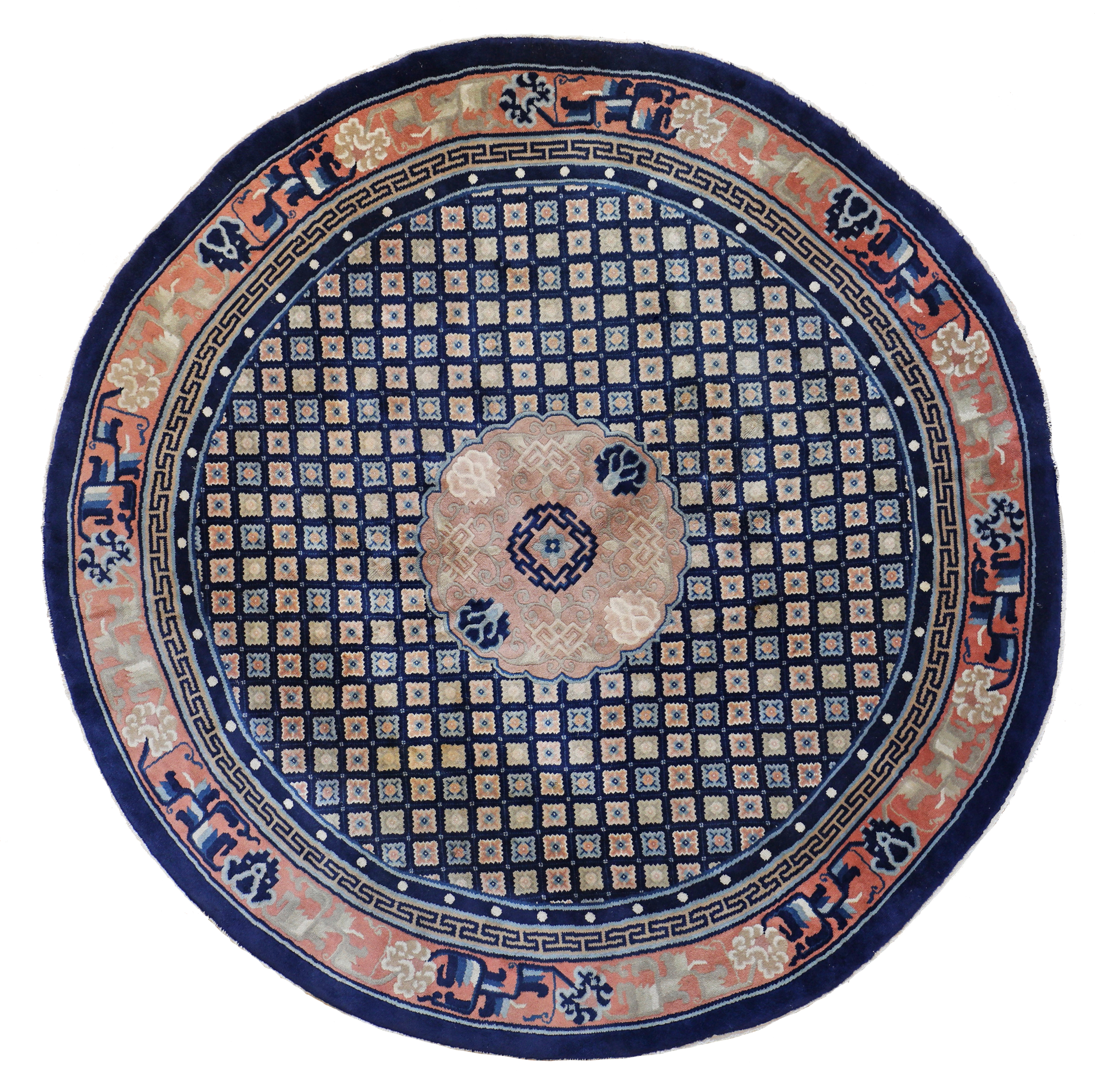
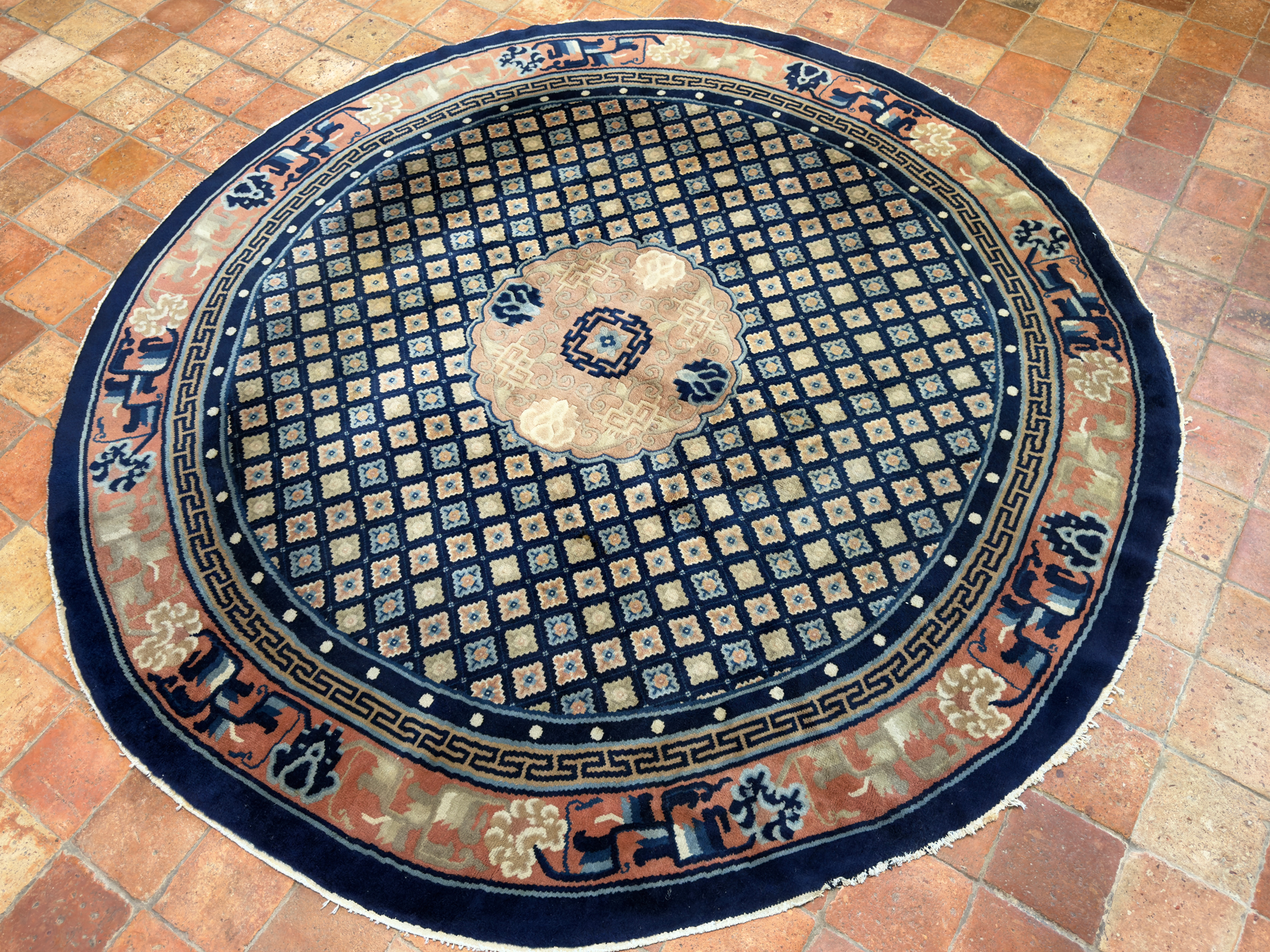
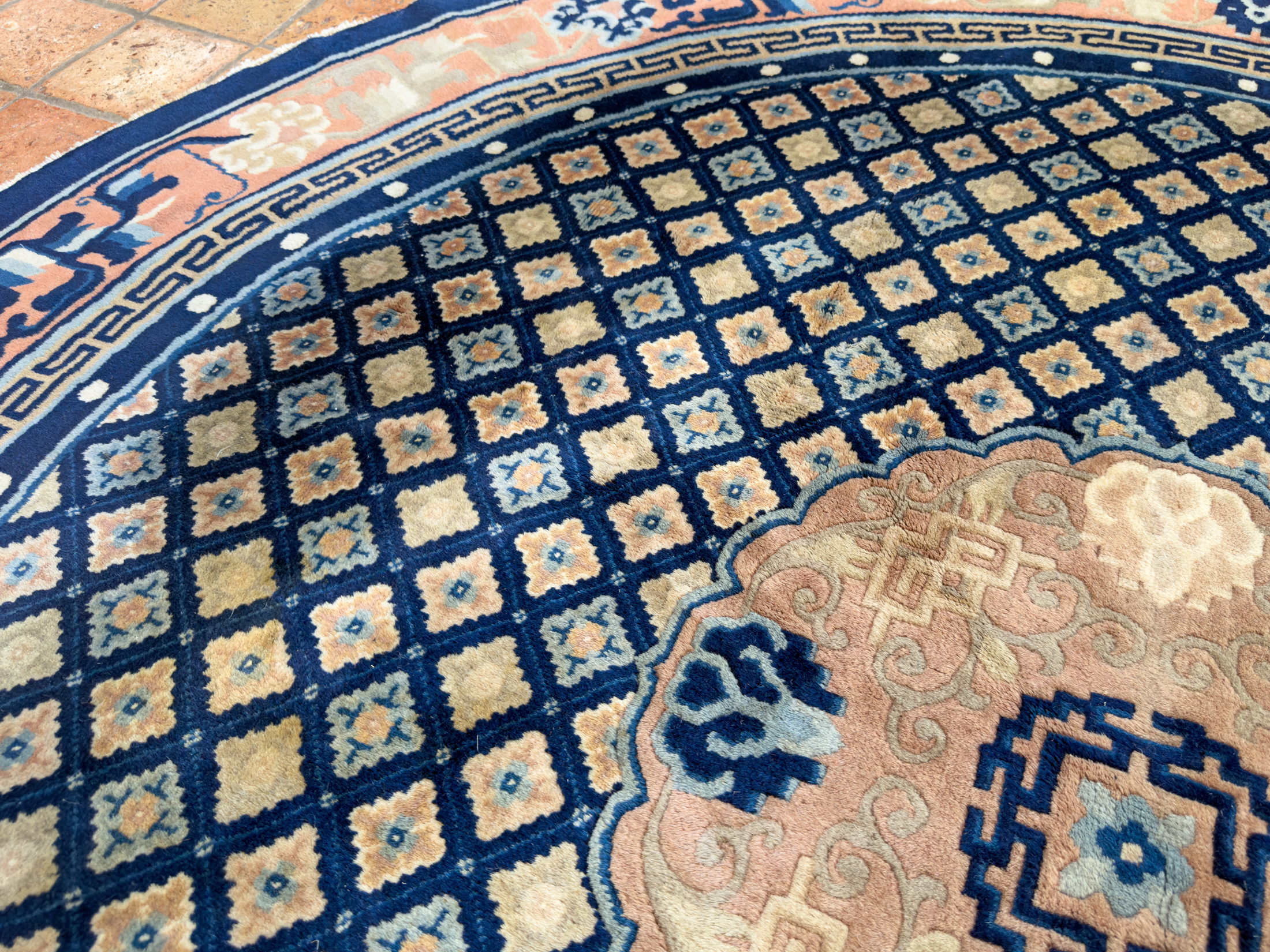
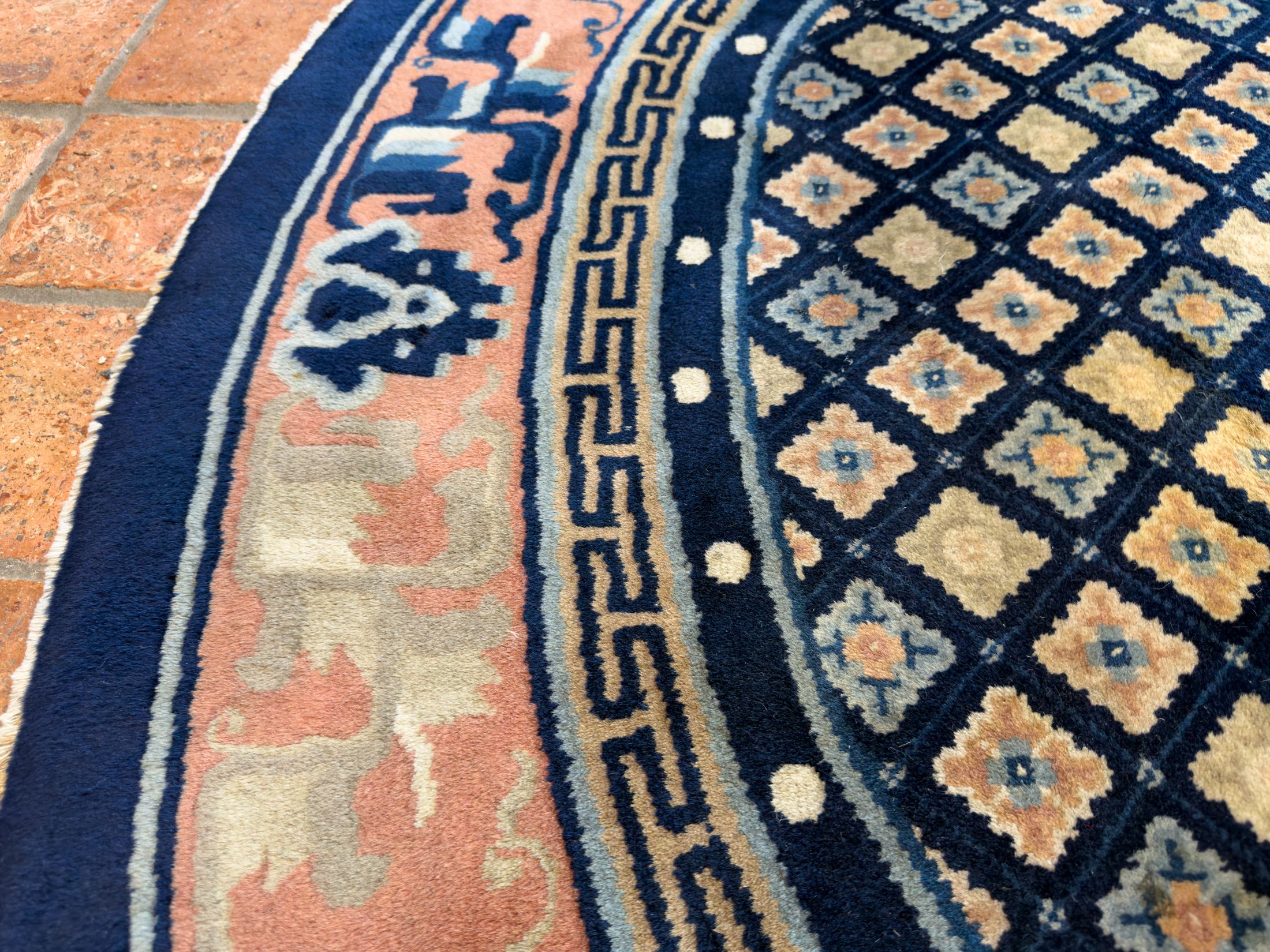
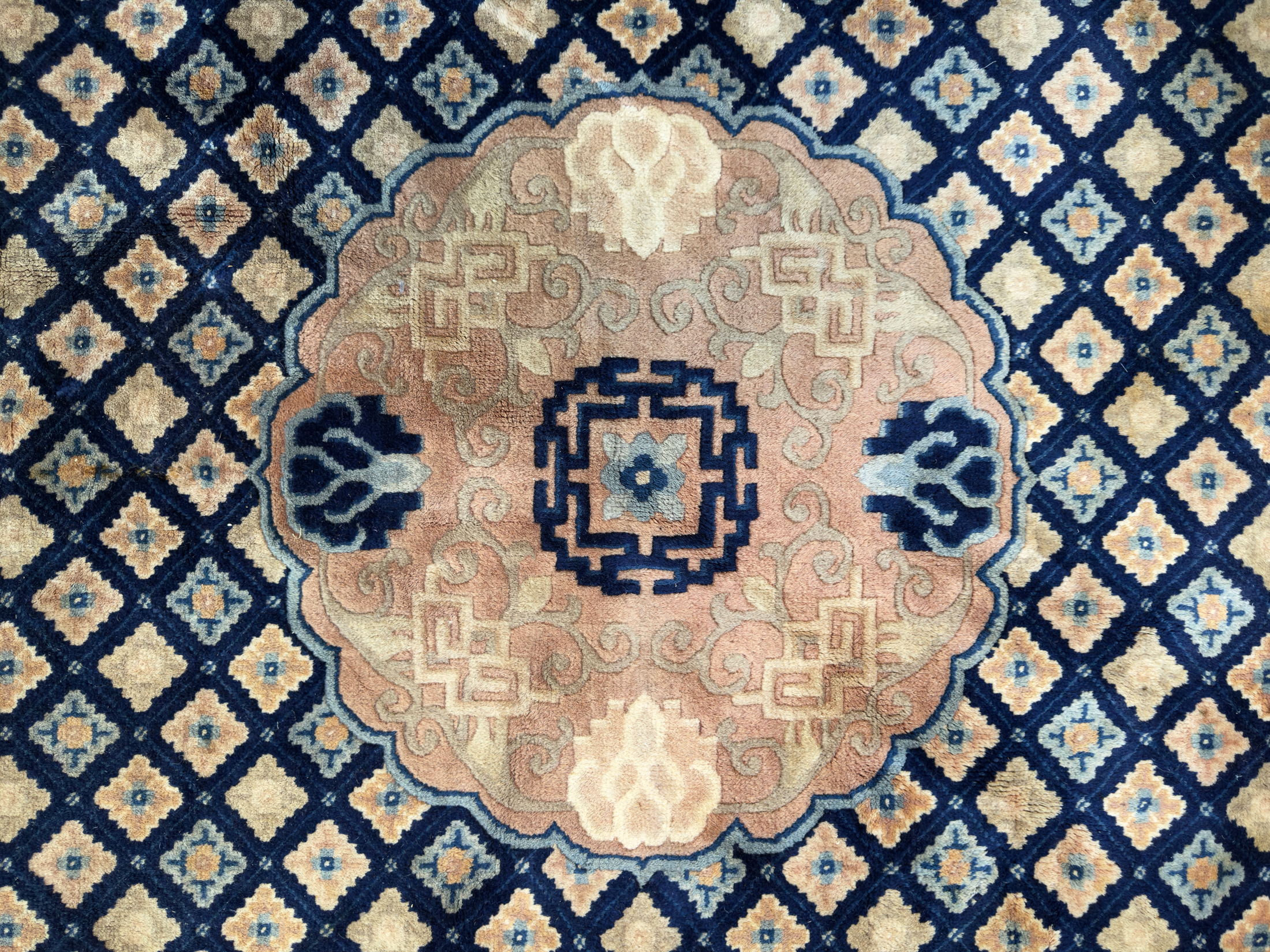
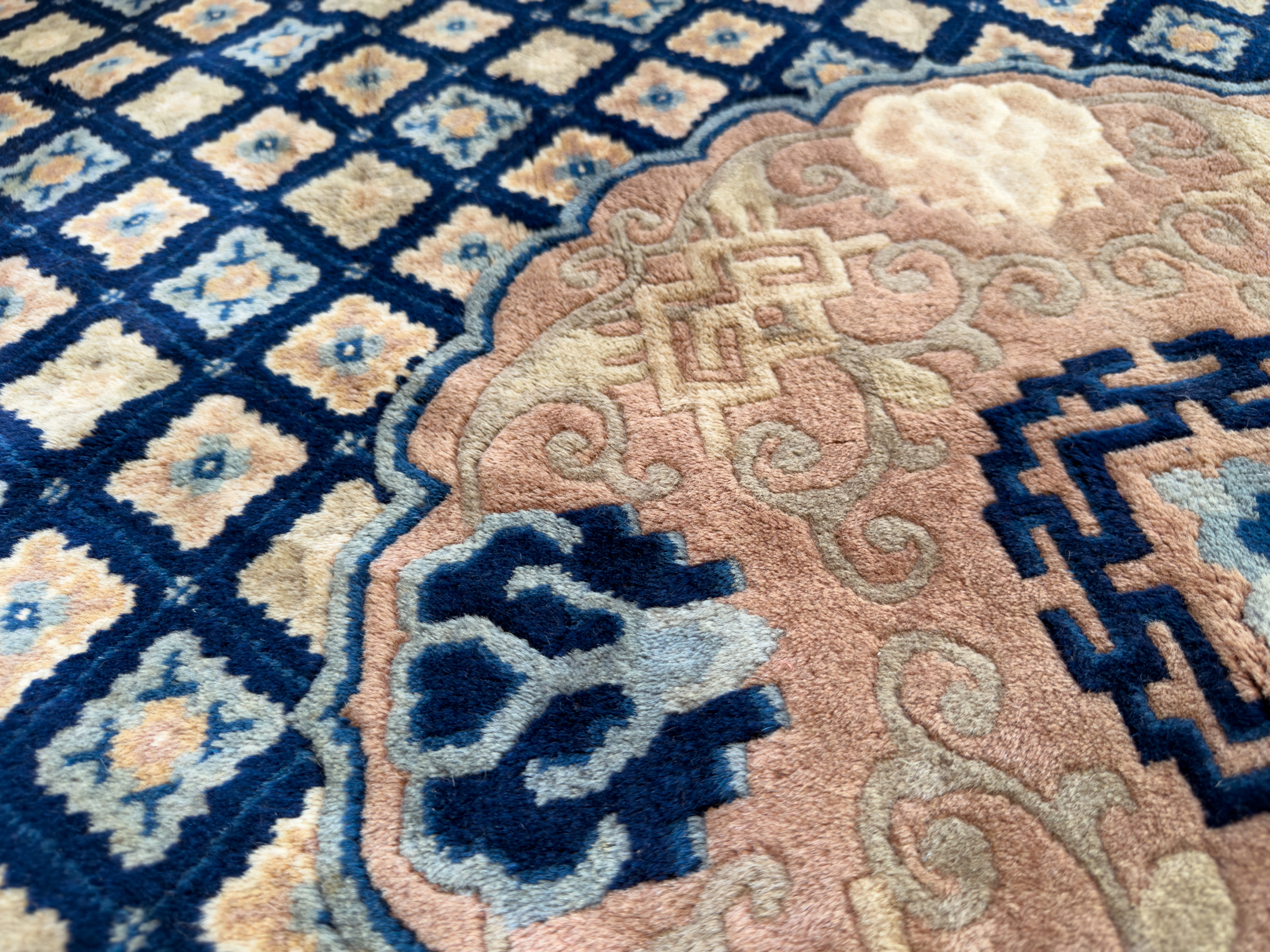
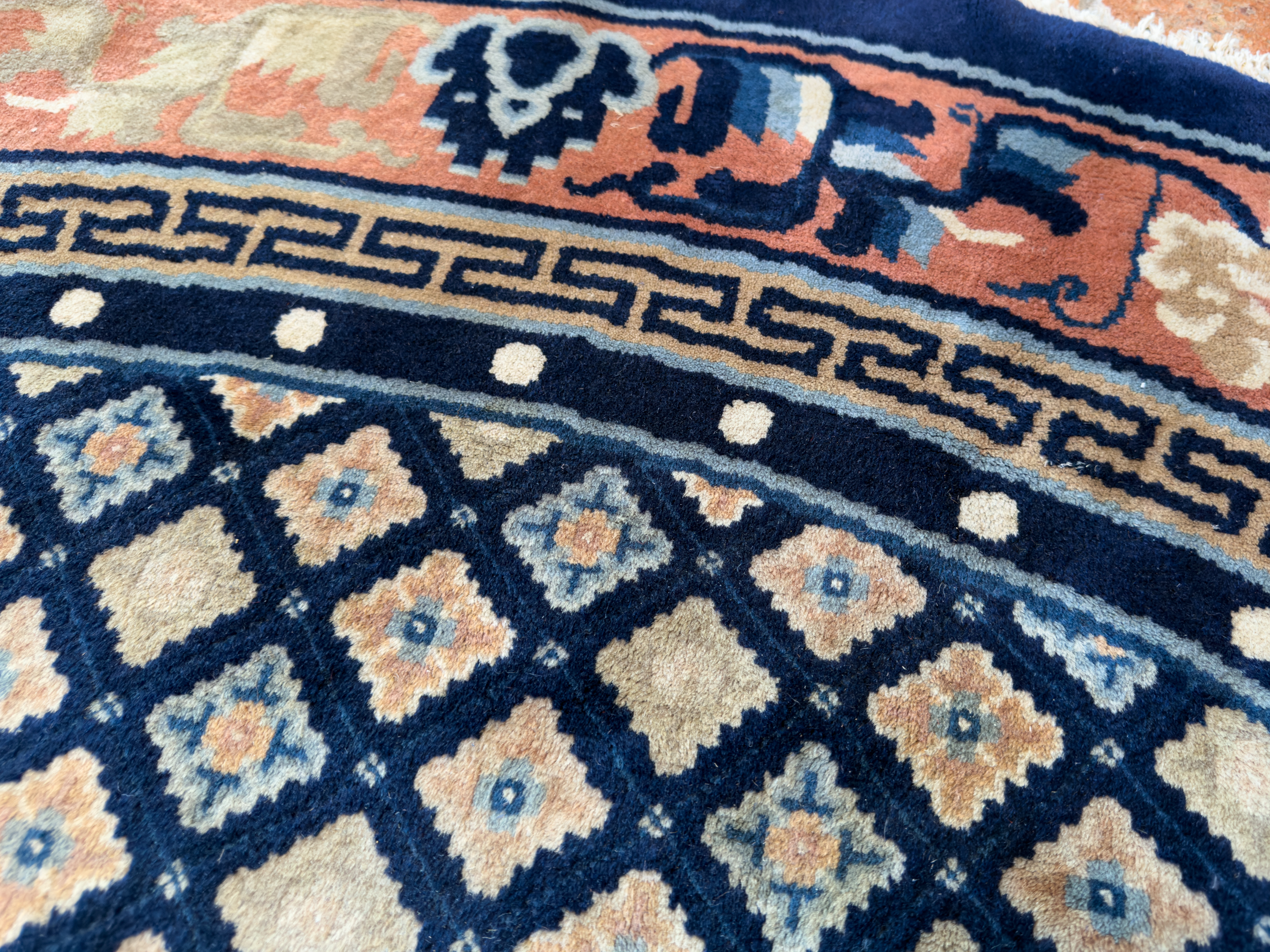
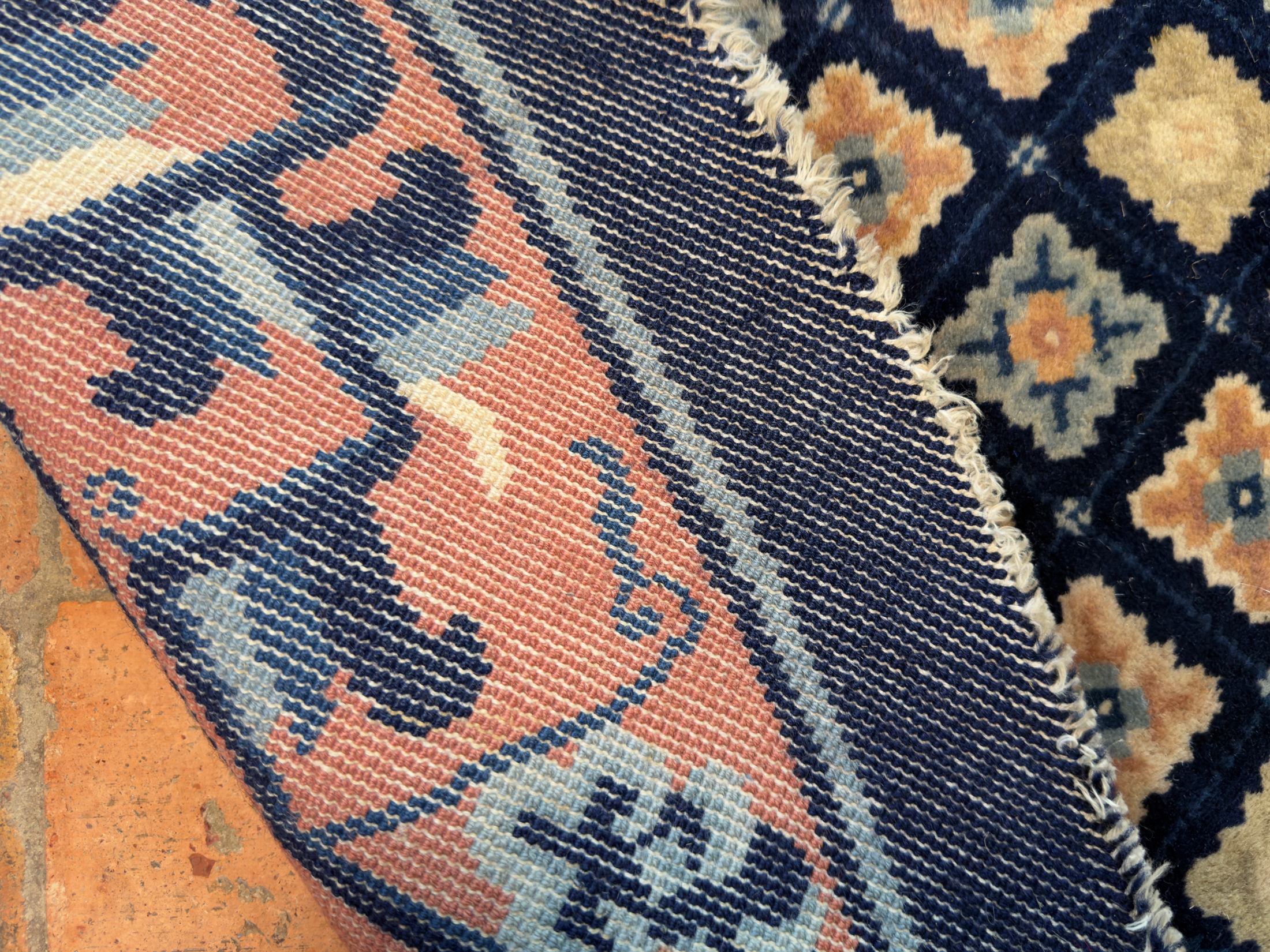
Surviving antique circular Ningxia carpets are rare, and examples are specifically documented in museum and auction literature. We can see the detailed Greek-key/fret border design, this is a characteristic Chinese carpet motif, particularly common in Ningxia weavings such as this piece. The all-over lattice pattern is particularly interesting because it matches known, authenticated 17th-century Chinese carpets from Ningxia that share the same round shape and grid-like design. This beautiful example is much younger than the 17th-18th rugs, woven between 1900-1920 with a soft cotton foundation and a great wool pile.
A rare and decorative antique Chinese Ningxia rug ready to be viewed at home or in our showroom by appointment.
Some history about Ningxia rugs: They are woven in virtually in any format, large square ‘throne’ carpets, long and narrow kang carpets, pillar rugs, saddle rugs, chair seats and backs and monastery meditation hall runners. The pattern range is similarly broad, but overall repeating textile patterns tend to be earlier (17th century) while medallions, often with lion dogs surrounded by cloud-wreaths, are somewhat later (18th and later centuries). Dragons often appear on chair covers, usually on yellow grounds. On large carpets, however, they are far less common. To place a chair on a dragon in an audience throne carpet would be in bad taste.
As with all true Chinese carpets, the knot is Persian open to the left (asymmetric). Antique carpets are quite coarse, 25-35 knots per square inch and double wefts often dominate the knots on the back. As a general rule, the older the rug, the more the wefts predominate. Thus, the knotting yarn on old pieces is relatively thin. Only with export demand in the west did thicker yarn come into use along with higher pile, to withstand shoe traffic.
Ningxia was the source for many of the pillar carpets for Tibetan and other Buddhist monasteries. Occasionally these rugs are inscribed in Tibetan character to give the patrons of the work and its intended location.
